Bison (a.k.a Buffalo) in Yellowstone National Park
Y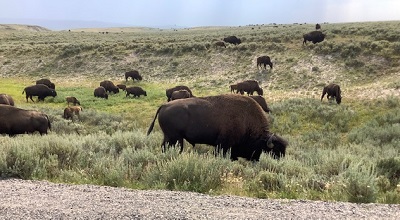 ellowstone National Park is a vast natural wonderland with stunning landscapes, diverse wildlife, and unique geological features. One of the most iconic and
awe-inspiring animals that visitors can encounter in the park is the American bison. These magnificent creatures are an important symbol of the American West
and have a rich history in Yellowstone.
ellowstone National Park is a vast natural wonderland with stunning landscapes, diverse wildlife, and unique geological features. One of the most iconic and
awe-inspiring animals that visitors can encounter in the park is the American bison. These magnificent creatures are an important symbol of the American West
and have a rich history in Yellowstone.
What are bison?
Bison, also known as buffalo, are the largest land mammals in North America. They can weigh up to 2,000 pounds
and stand over six feet tall at the shoulder. In Yellowstone, visitors can see herds of bison grazing in open meadows, crossing rivers, and even strolling down
the roads. These massive animals are a sight to behold, and their presence adds to the park's wild and untamed character. They typically shed their winter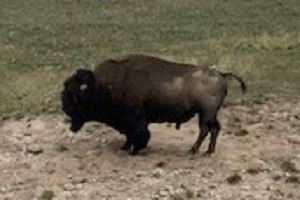 coat
of fur in the Spring and grow a new coat. The coat is much longer in the front half of the animal and only grows about 1 inch long on the back
half. They may look bald on the back half, but there is a coat of fur there. The fur starts out dark, almost black and fades to a gray as the year goes
on.
coat
of fur in the Spring and grow a new coat. The coat is much longer in the front half of the animal and only grows about 1 inch long on the back
half. They may look bald on the back half, but there is a coat of fur there. The fur starts out dark, almost black and fades to a gray as the year goes
on.
Bison in Yellowstone
Bison have a fascinating
history in Yellowstone. In the 1800s, bison were hunted almost to extinction in North America. By the late 1800s, only a few hundred bison remained in the wild,
and many of those were in Yellowstone. Thanks to the park's protected status and conservation efforts, bison have made a remarkable recovery. Today, Yellowstone
is home to over 4,000 bison, making it one of the largest bison populations in the world.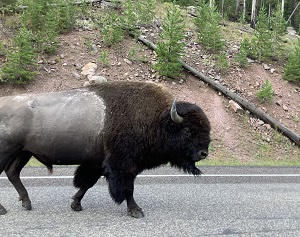
When you visit Yellowstone
Visitors to Yellowstone can learn more about bison and their importance to the park's ecosystem by visiting the many interpretive exhibits and ranger-led programs. These programs cover topics such as the bison's role in shaping the park's grasslands, their unique adaptations to survive in the harsh Yellowstone winters, and the challenges of managing such a large population of these animals in a changing environment.
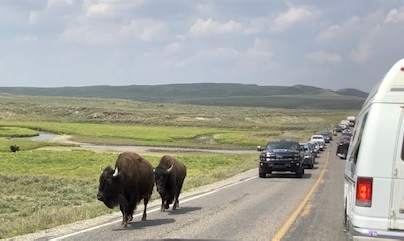
Bison frequently cause traffic jams, as they like to walk on the roads.
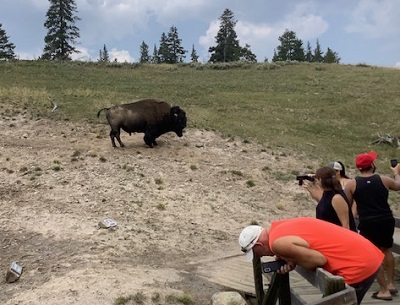
While bison are undoubtedly a highlight of any visit to Yellowstone, it's important to remember that these
animals are wild and should be treated with respect. Visitors should always keep a safe distance from bison and never approach them on foot. Bison are
surprisingly agile and can run at speeds of up to 30 miles per hour, making them capable of outrunning humans. In addition, bison can be unpredictable and may
charge if they feel threatened. Visitors should always give bison plenty of space and enjoy these magnificent animals from a safe distance. Of, course, staying
back from them is not always possible. You may be walking on a trail, as I was, when one steps out from behind a rock and walks past you.
Remaining calm, quiet and making no sudden moves is usually all it takes for a peaceful encounter.
They have simply walked past me countless times, as
as I slowly moved back.
 Overall,
bison are one of the most iconic and beloved animals in Yellowstone National Park. Whether you're a first-time visitor or a seasoned veteran, seeing a herd of
bison grazing on the park's grasslands is a truly unforgettable experience. So come to Yellowstone, take in the beauty of the landscape, and marvel at the
incredible bison that call this place home.
Overall,
bison are one of the most iconic and beloved animals in Yellowstone National Park. Whether you're a first-time visitor or a seasoned veteran, seeing a herd of
bison grazing on the park's grasslands is a truly unforgettable experience. So come to Yellowstone, take in the beauty of the landscape, and marvel at the
incredible bison that call this place home.
 Portable Power Bank 50,000 mah, Ultra-High Capacity Battery Pack,2 USB Output High Speed Charging Power bank
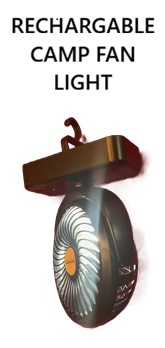 Portable Camping LED Light and Fan, 40hrs Rechargeable Battery w Hanging Hook for Tent, Car, RV, outages, etc.
 Portable Shower Pump - Rechargeable Battery, w/Shower Head and Handheld Sprayer
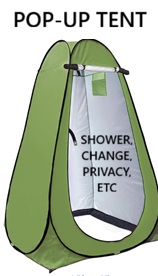 Pop Up Instant Portable Tent -
For changing, showers, Toilet, Rain Shelter with Window for Beach Easy Set Up, Foldable with Carry Bag, Lightweight and Sturdy
Pop Up Instant Portable Tent -
For changing, showers, Toilet, Rain Shelter with Window for Beach Easy Set Up, Foldable with Carry Bag, Lightweight and Sturdy OlimpiaFit Quick Dry Towel - Fast Drying Lightweight Microfiber Travel Towels w/Bag for Camping, Beach, Gym, Backpacking, Sports, Yoga, Swim
 Headlamp - 1200 Lumen Super Bright, Rechargeable, Motion Sensor, 2-Pack, Waterproof w White Red Light in 8 Modes
 Camping mattress -
Super-comfortable, mattress, with Pillow, Thick 6 Inch Ultralight Sleeping Pad with Built-in Pump
Camping mattress -
Super-comfortable, mattress, with Pillow, Thick 6 Inch Ultralight Sleeping Pad with Built-in Pump Coleman Camping Tent with 60 second Instant Setup, for 4, 6, 8, 10 people; Weatherproof Double-Thick Fabric and Included Carrying
bag
Coleman Camping Tent with 60 second Instant Setup, for 4, 6, 8, 10 people; Weatherproof Double-Thick Fabric and Included Carrying
bag